

Fascia release workout promises faster muscle recovery, reduced stiffness, and better flexibility for active people and athletes. But are you doing it right—and is it really as powerful as the hype suggests?
Key Takeaways
- Fascia release workouts (self-myofascial release like foam rolling) consistently provide modest, short-term improvements in muscle recovery and flexibility when used properly.
- The most common mistakes are rolling too quickly, using too much pressure, or not enough time per muscle group.
- Structured routines, integrating fascia release with dynamic stretching or cooldowns, deliver the best—and most realistic—results.
- The Core Concept: What Is a Fascia Release Workout?
- Step-by-Step Guide: How To Do Myofascial Release at Home
- Advanced Analysis & Common Pitfalls
- Conclusion
- FAQ
The Core Concept: What Is a Fascia Release Workout?
A fascia release workout uses simple tools, often a foam roller or massage ball, to apply sustained, controlled pressure along tight or sore muscles. This technique—more technically called self-myofascial release (SMR)—is designed to reduce muscle soreness (DOMS), temporarily improve range of motion (ROM), and modestly speed up recovery when added to warm-up or cooldown routines.

Recent studies, such as the 2024 foam rolling trials, confirm the benefits are reliable but usually not dramatic: reduced post-exercise soreness by 15–30%, small increases in flexibility, and faster removal of metabolic waste like lactate from muscles after intense exercise. These effects are most apparent when rolling for at least 2 minutes per muscle group and combining SMR with light activity or dynamic stretching as part of your warm-up or cool-down. This combination consistently outperforms SMR alone in research settings.
Most of the proven benefits are from classic foam rolling routines—not “branded” or mythical fascia stretching moves. The advantage is that almost anyone with a roller can do it at home for a fraction of the cost of professional therapy sessions.
Step-by-Step Guide: How To Do Myofascial Release at Home
Set yourself up for success and safety by following these science-backed, real-world steps for an effective fascia release workout:
- Pick the right tool: Use a medium-density foam roller for large muscle groups and a massage or lacrosse ball for small, hard-to-reach areas like your glutes or feet.
- Warm up: Start with 3–5 minutes of low-intensity activity (like walking or cycling) to increase blood flow.
- Position correctly: Place the roller under the muscle group you want to release (quads, calves, glutes, upper back, etc.). Keep your body relaxed and avoid rolling over joints or your lower back/neck.
- Apply steady, controlled pressure: Slowly roll back and forth along the muscle—move about 1 inch per second. Hold on any sore “hot spots” for 15–30 seconds and let the discomfort ease (but not escalate to pain).
- Duration matters: Spend 60–120 seconds on each muscle group. Repeat for any other area that feels tight—but avoid overdoing it.
- Integrate with your workout: For best effects, combine SMR with mobility moves or dynamic stretching exercises as part of your warm-up or cool-down. This combination consistently outperforms SMR alone in research settings.
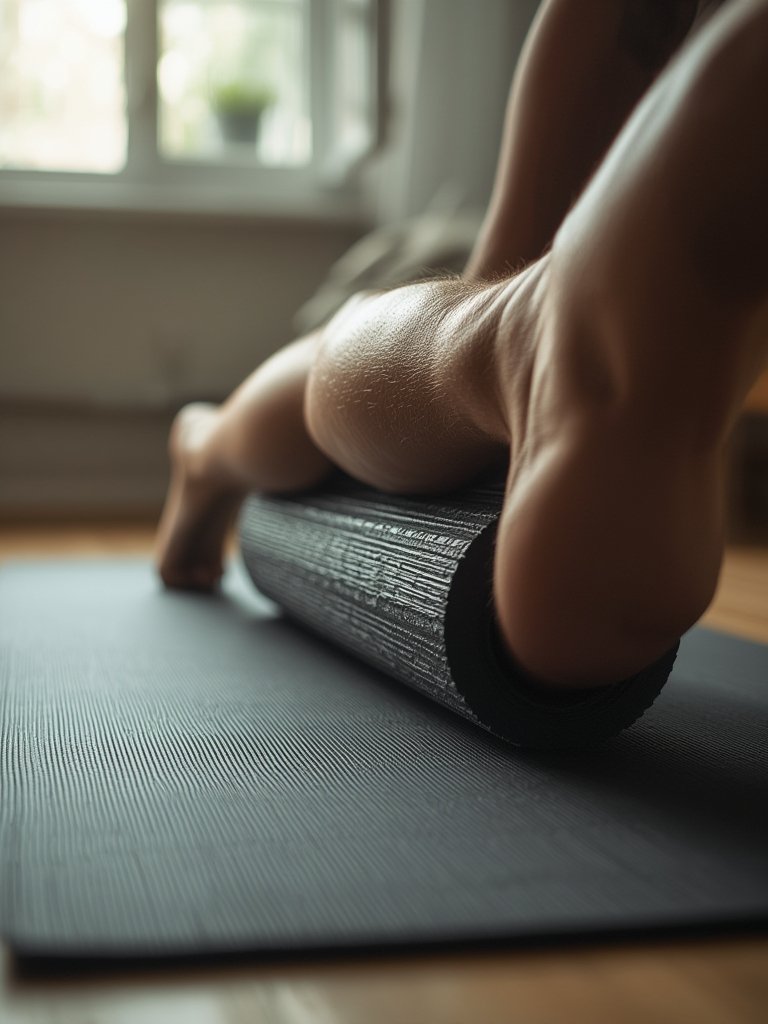
To finish, gently stretch the muscles you’ve rolled. Remember—rolling is not a “magic fix.” Regular sessions (3–5x/week) are needed for ongoing recovery, just like with wall Pilates for flexibility.
Advanced Analysis & Common Pitfalls
Studies and user reviews over the past three years reveal that most people make the same 5 mistakes that sabotage fascia release results.
| Common Mistake | Why It’s a Problem | Fix |
|---|---|---|
| Rolling Too Fast | Superficial stimulus, little muscle effect | Move as slow as 1 inch per second |
| Using Too Much Pressure | Bruising, rebound pain, irritation | Aim for “mild-to-moderate” discomfort |
| Not Enough Time Per Muscle | Little to no measurable benefit | 60–120 seconds per region minimum |
| Ignoring Adjacent Muscles | Misses muscle chains, less ROM gain | Roll “chains” not just sore spots |
| Expecting Instant or Dramatic Results | Frustration, abandoning the practice | Realistic goal: short-term comfort and flexibility |
Another overlooked issue: safety and contraindications. Don’t roll over acute injuries, varicose veins, active infections, bony spikes, or the lower back or neck. Protocols for vagus nerve reset exercises sometimes mention similar cautions. Too much pressure or going too frequently can cause more harm than good; respect pain signals.
Cost comparison studies show at-home SMR tools are far more affordable and accessible than ongoing visits to a myofascial therapist or massage clinic. Still, targeted professional help can be valuable for chronic or complex pain (see clinical data on fascia-based therapies).
In summary, most frustration with at-home fascia release comes from poor form, not enough time spent, false expectations, or trying to “beat up” muscles rather than gently help them recover. Just as natural fat burning foods work gradually, so does SMR.

Conclusion
Fascia release workout methods, especially foam rolling and massage balls, offer reliable, research-backed recovery for sore muscles and slight boosts to flexibility—but only when performed with care, patience, and realistic expectations. The real gains come when you slow down, target major muscle groups for around 2 minutes each, and weave these techniques into your routine alongside low-impact cardio and stretching. Ignore myths about “breaking up adhesions” and focus on the modest but significant benefits that fascia release workout routines deliver if practiced consistently. Ready to feel the difference? Start your own structured recovery session today.
FAQ
How often should I do fascia release workouts for best results?
Three to five times weekly is ideal for most, but even 2–3 sessions a week can deliver measurable recovery benefits if you focus on quality, not just quantity.
Can I use a fascia release workout instead of stretching?
No. SMR helps reduce soreness and gives a temporary flexibility boost, but it’s most effective when paired with dynamic stretching—not as a total replacement.
Is expensive equipment needed for self-myofascial release at home?
No. A basic foam roller or even a lacrosse ball is enough for most people. Fancy vibrating rollers can enhance comfort but are not essential.
What should I do if rolling is very painful?
Stop immediately. Discomfort is normal, but sharp or radiating pain is a warning. Reduce pressure, try a softer tool, and never roll over injured or sensitive areas.
How quickly will I see results from fascia release workouts?
Some relief in soreness and improved range of motion can occur right after a session, but the best results are cumulative over weeks of regular use.